
Future-Proof Your Career: AI Skills That Will Be Mandatory Soon 🚀
Introduction
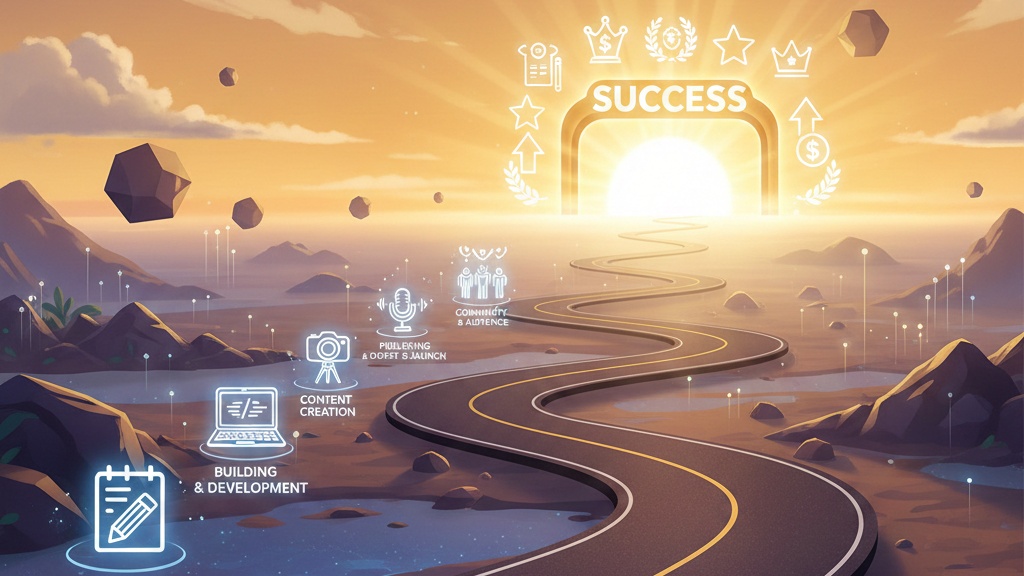
The world is changing faster than ever, and artificial intelligence (AI) is at the heart of this transformation. From the smartphone in your pocket to the apps you use for learning, AI is everywhere. It’s no longer just a buzzword for tech giants; it's becoming a fundamental part of every industry, including healthcare, finance, agriculture, and even the arts. For students and young learners in India, this shift presents a massive opportunity. The question isn't if AI skills will be important, but which skills you need to learn to stay ahead. Ignoring this wave is like ignoring the internet in the early 2000s. This guide is your roadmap to understanding the essential AI skills that will soon become mandatory for success in any career path you choose. Let's dive in and prepare you for the future! ✨
The Core Skill: AI Literacy and Prompt Engineering
Before you can build complex AI models, you must first learn to use them effectively. This is the new digital literacy. Think of it like learning to use a search engine in the 90s. Today, the most crucial skill in this area is Prompt Engineering.
What is Prompt Engineering? 🎯
Prompt engineering is the art of communicating with AI. It’s about crafting clear, specific, and effective instructions (prompts) to get the desired output from AI models like chatbots or image generators. It’s not about coding; it’s about communication and critical thinking.
Why it's essential for Indian students:
- Academic Support: Imagine getting a detailed explanation of a complex physics concept or generating practice questions for your exams instantly. A well-crafted prompt can act as a personalized tutor.
- Creative Projects: Need to design a poster for a college fest or write a script for a short film? You can use AI tools, but only if you know how to ask correctly. For example, instead of saying "write about Diwali," a better prompt is "Write a short, cheerful blog post for a student audience about celebrating an eco-friendly Diwali, using simple language."
- Future Jobs: Companies will look for employees who can efficiently use AI to boost productivity. Whether you're in marketing, engineering, or medicine, knowing how to get the best out of AI will be a non-negotiable skill.
Practical Tip to Start Now:
Pick any AI chatbot and give it a task. Start with a simple prompt like: "Explain the concept of photosynthesis." Then, refine it: "Explain photosynthesis to a 12-year-old, using an analogy of a kitchen." Notice the difference in the output? This practice of refining your instructions is the core of prompt engineering. 💡
Data Fluency: Understanding the Language of AI
AI runs on data. It learns patterns, makes predictions, and generates content based on the data it’s trained on. Therefore, having a basic understanding of data—what it is, how it's organized, and how to interpret it—is becoming a superpower. This isn't about becoming a data scientist overnight, but about developing data fluency.
Reading the Numbers: Basic Analytics 📊
In every field, data is used to make decisions. A business looks at sales figures, a social media manager tracks engagement, and a doctor analyzes patient reports. As a student, you can start developing this skill by:
- Analyzing your own performance: Look at your study patterns. Which subjects do you spend the most time on? Do your grades correlate with the time spent? This is basic data analysis.
- Understanding graphs and charts: Get comfortable reading charts in newspapers, textbooks, and online articles. Ask yourself: What story is this data telling? Is it biased?
Data Ethics and Privacy 🔒
With great data comes great responsibility. As AI becomes more integrated into our lives, understanding data privacy and ethics is crucial.
An Indian Context:
Think about the apps you use daily. When you use a food delivery app, it collects data on your eating habits. When you use a payment app, it tracks your financial transactions. Understanding what data you are sharing and how it might be used is a critical skill. As future professionals, you will be responsible for handling data ethically, whether you're a journalist protecting a source or a developer building a new app.
Practical Tip to Start Now:
Take 15 minutes to review the privacy settings on your favorite social media or e-commerce app. See what information they are collecting. This simple act builds awareness about the digital footprint you leave behind.
Critical Thinking and Ethical Judgment: The Human Edge 🧠
AI is a powerful tool, but it isn't infallible. It can make mistakes, reflect biases present in its training data, and generate misinformation. The most valuable skills you can develop are the ones that AI cannot easily replicate: critical thinking, creativity, and ethical judgment.
Spotting AI-Generated Content and Misinformation 🕵️♀️
We are entering an era where seeing is no longer believing. AI can create realistic images, videos (deepfakes), and articles that are difficult to distinguish from human-made content. Learning to question sources and verify information is your shield.
- Check the source: Is the information coming from a reputable website or an unknown social media account?
- Look for inconsistencies: In AI-generated images, are there strange details, like hands with too many fingers or nonsensical text in the background?
- Cross-verify: If a piece of news seems shocking, check if other reliable news outlets are reporting it.
Understanding and Debiasing AI 🤝
AI models learn from the data they are given. If the data reflects historical or societal biases (e.g., gender or regional stereotypes), the AI's output will also be biased. For Indian students, this is a very important concept.
Example:
Imagine an AI tool used by a company to screen job applications. If the training data is mostly from male engineers from certain cities, the AI might unfairly rank applications from women or candidates from smaller towns lower. A student with critical thinking skills would recognize this potential flaw and question the AI's decision, advocating for a fairer process.
Practical Tip to Start Now:
The next time you read a news article or watch a video, ask yourself: "Who created this? What might be their perspective? Is there another side to this story?" This habit of questioning is the foundation of critical thinking.
Creative Problem-Solving with AI Tools 🛠️
The future isn't about humans versus AI; it's about humans with AI. The most successful individuals will be those who can use AI as a creative partner to solve problems in innovative ways.
Augmenting Your Creativity ✨
Instead of seeing AI as a replacement for your skills, view it as a co-pilot.
- For the Budding Engineer: Use AI to help write boilerplate code, debug errors, or brainstorm different architectural solutions for a project.
- For the Aspiring Writer: Use AI to overcome writer's block by generating ideas, outlines, or different phrasing options. You remain the author, but AI can be your assistant.
- For the Commerce Student: Use AI to analyze market trends, summarize lengthy financial reports, or create mock business plans.
An Indian Example:
A student starting a small business selling handmade crafts on Instagram could use AI tools to:
- Generate creative product descriptions.
- Brainstorm social media post ideas for different festivals.
- Create visually appealing ad images.
This allows the student to focus on the core business: crafting beautiful products.
Practical Tip to Start Now:
Take a project you are currently working on—be it a school assignment or a personal hobby. Brainstorm three ways you could use an AI tool to make your work better or faster. For instance, if you're creating a presentation, you could ask an AI to suggest a structure or generate relevant images.
Key Takeaways
- Master the Art of Prompting: Your ability to communicate effectively with AI tools will be a baseline skill. Practice giving clear and detailed instructions.
- Become Data Fluent: Learn to read and question data. Understand the basics of data privacy and ethics, as data is the fuel for AI.
- Hone Your Human Skills: AI can't replace critical thinking, creativity, and ethical judgment. These are your unique advantages. Always question AI's output and use it responsibly.
- Use AI as a Partner: Don't fear AI; collaborate with it. Use AI tools to enhance your productivity and creativity in all your projects.
Conclusion
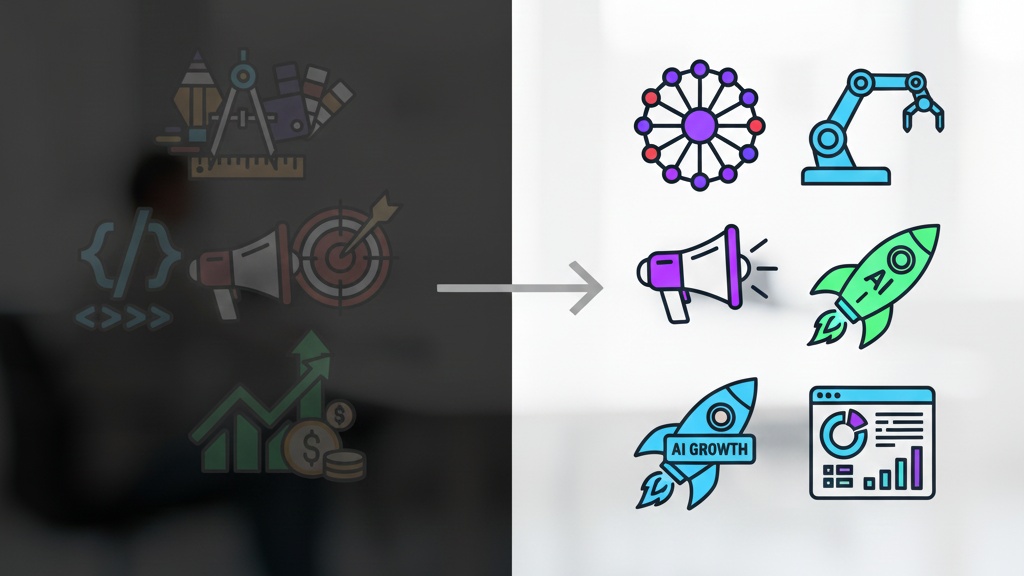
The future is not something that happens to you; it's something you build. The rise of AI is not a threat to your career but an invitation to upgrade your skills. By focusing on AI literacy, data fluency, critical thinking, and creative problem-solving, you are not just preparing for the mandatory skills of tomorrow—you are positioning yourself to be a leader and an innovator. The journey of learning these skills can be exciting and empowering. Start small, stay curious, and embrace the change. The world needs your unique human intelligence, now more than ever, to guide the powerful artificial intelligence we are creating. Your future is bright, and it's waiting for you to shape it. 🌟
Ready to Start Your AI Journey?
Feeling inspired but not sure where to begin? We get it! The world of AI can seem vast and complex. That's exactly why we created BandhanNova AI Hub. Our platform is designed specifically for students like you, offering accessible courses, practical projects, and a supportive community to help you master these essential AI skills. From understanding the basics of prompt engineering to exploring ethical AI, we provide the tools and guidance you need to future-proof your career.
Take the first step today. Visit BandhanNova AI Hub and explore how you can begin your journey to becoming an AI-powered professional! 🚀